
The Friction of Folding the Map
There is a specific kind of irony in sitting down to write a column about going analog while staring into the blue-light glow of a screen. If you’ve been following Country Road Chronicles, you know the aesthetic here is rooted in the bucolic, the rustic, and the tactile. But behind the scenes, the "Chronicler" has been grappling with a very modern demon: a chronic screen addiction.
When I started this journey in January, my screen time was averaging nearly 9 hours a day. That is over a third of a human life spent in a digital vacuum. Today, I’ve managed to claw that back to 6 hours. While that’s progress, let’s be candid—it’s nowhere near where I want to be. My North Star is a sub-two-hour day, a true "analog-first" existence. But as a content creator, I’ve realized that the very tools I use to share this rustic vision are the ones keeping me from fully living it.

The Content Creator’s Paradox
How do you document a "slow life" at high speed? To build this brand, I need the camera, the editing suite, and the social platforms. This creates a friction point where the "work" requires the very thing I’m trying to escape. I’ve had to accept that for me, going analog isn’t a race to a finish line; it’s a deliberate, sometimes messy pivot.
To bridge this gap, I’m moving away from mindless scrolling and toward structured utility. This looks like:
• The Physical Barrier: I’ve officially ordered a timed lockbox for my phone. If the willpower isn't there, the reinforced plastic will have to be.
• The Digital Gatekeeper: I’m utilizing the Opal app to aggressively filter out the noise during my deep-work hours.
• Deep-Work Sprints: Setting specific "tech windows" so the phone is a tool I pick up for a purpose, rather than a limb I just happen to carry.
Analog Soul, AI Mind
The struggle is further complicated by the era we live in. As a Millennial, I feel the weight of this "middle-child" generation. We remember the world before the internet, yet our careers often depend on staying ahead of the curve. We are currently in the age of AI—a pivot point that is crucial for our professional survival.
So, how do I reconcile a "New England bucolic" lifestyle with the necessity of AI?
For me, the pivot looks like blending. I view AI not as a replacement for the soul of my work, but as a way to shorten the "screen time" required to do the boring stuff. If AI can help me organize data or streamline a workflow in ten minutes that used to take two hours, that’s an hour and fifty minutes I get to spend outside, away from a desk. The goal is to use the most cutting-edge technology to buy back the most primitive human experiences.

A Journey, Not a Race
I’m sharing this because I want to be transparent: the road to a "Country Road" lifestyle is paved with digital distractions. I am not "there" yet. I am still the guy checking his notifications too often. I am still the guy who feels the twitch to reach for the phone when there’s a moment of silence.
Going analog in 2026 isn't about throwing your MacBook into a lake; it’s about regaining the agency to choose when you plug in. It takes work, it takes structure, and most importantly, it takes a bit of grace for yourself when you slip up.
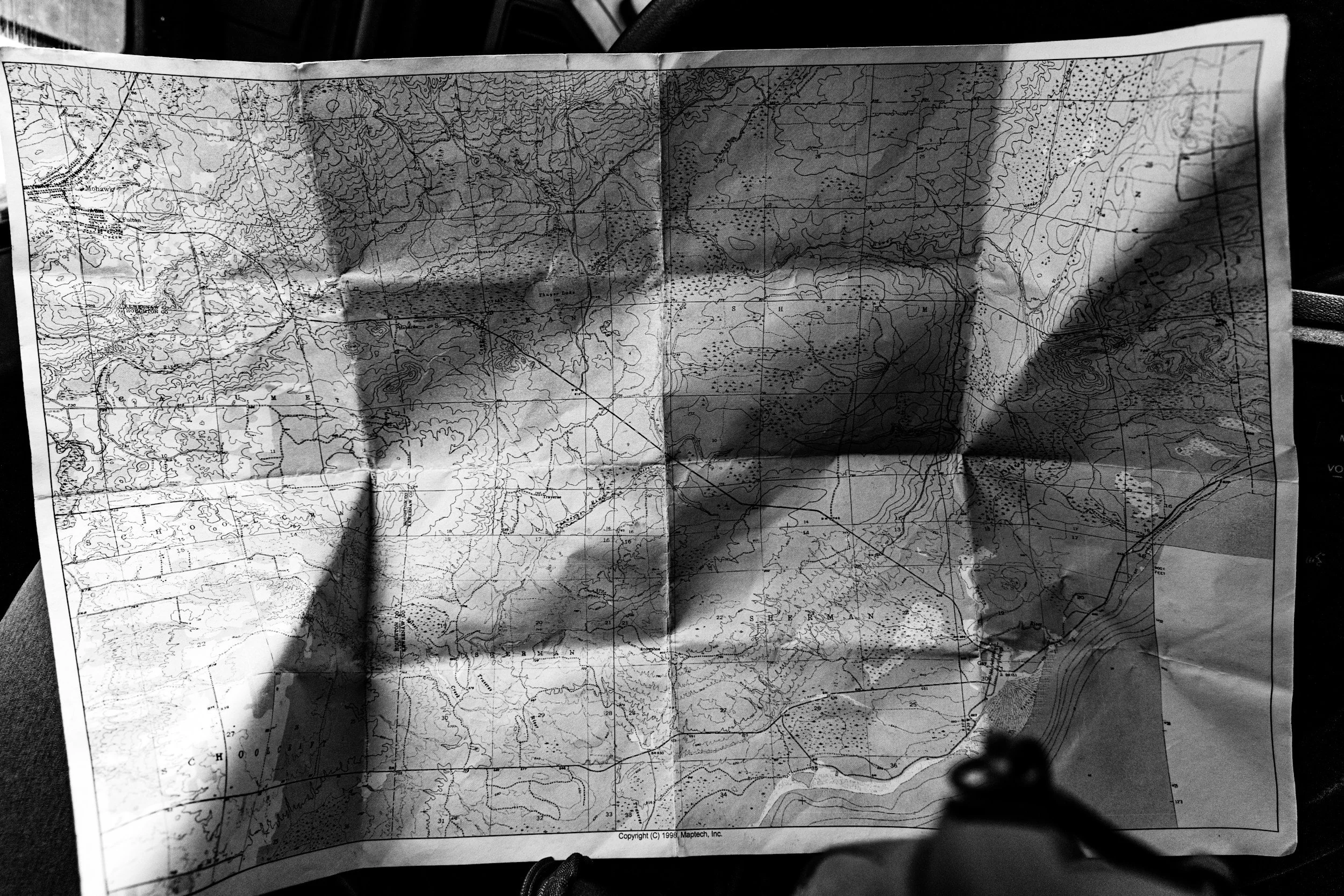
Stay tuned as I keep tweaking the settings on this digital life. The map is being folded, but we’re still finding the way.